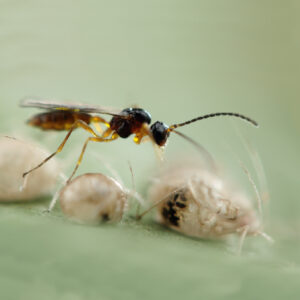
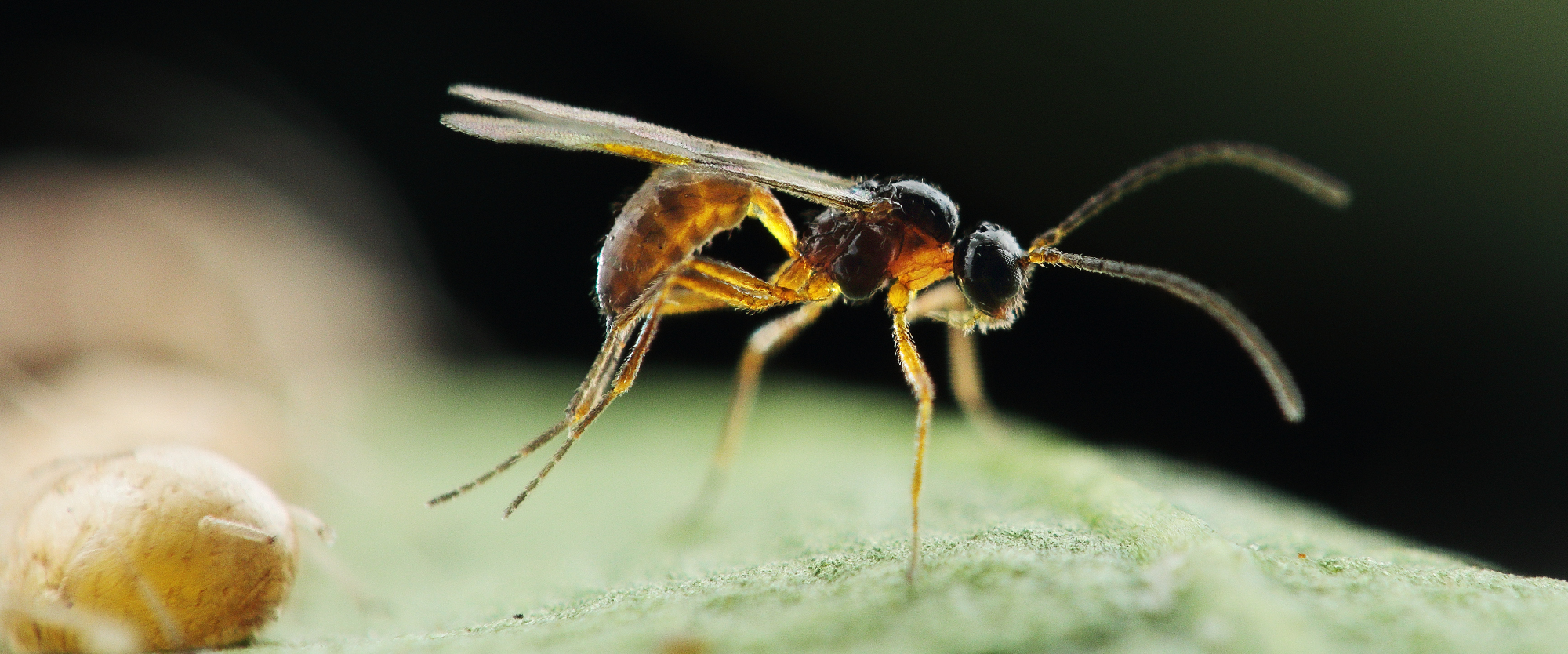
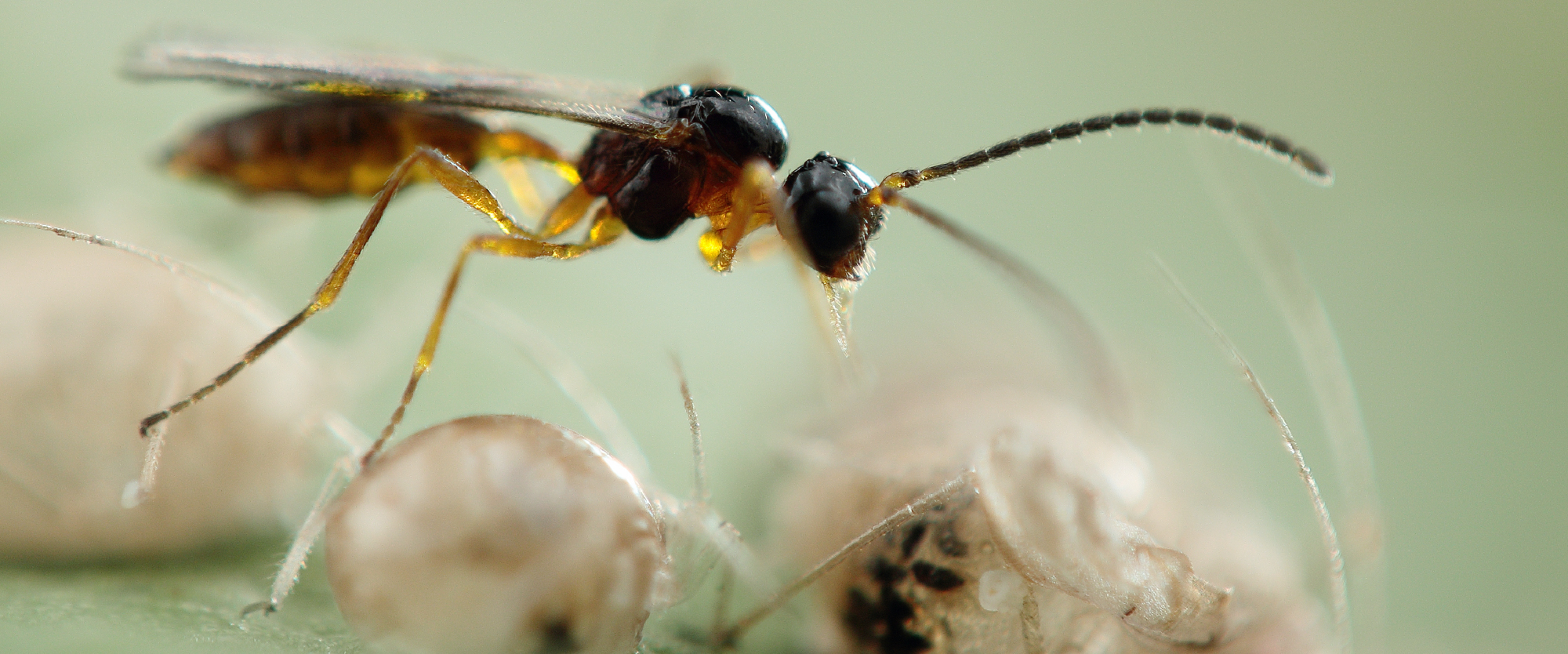

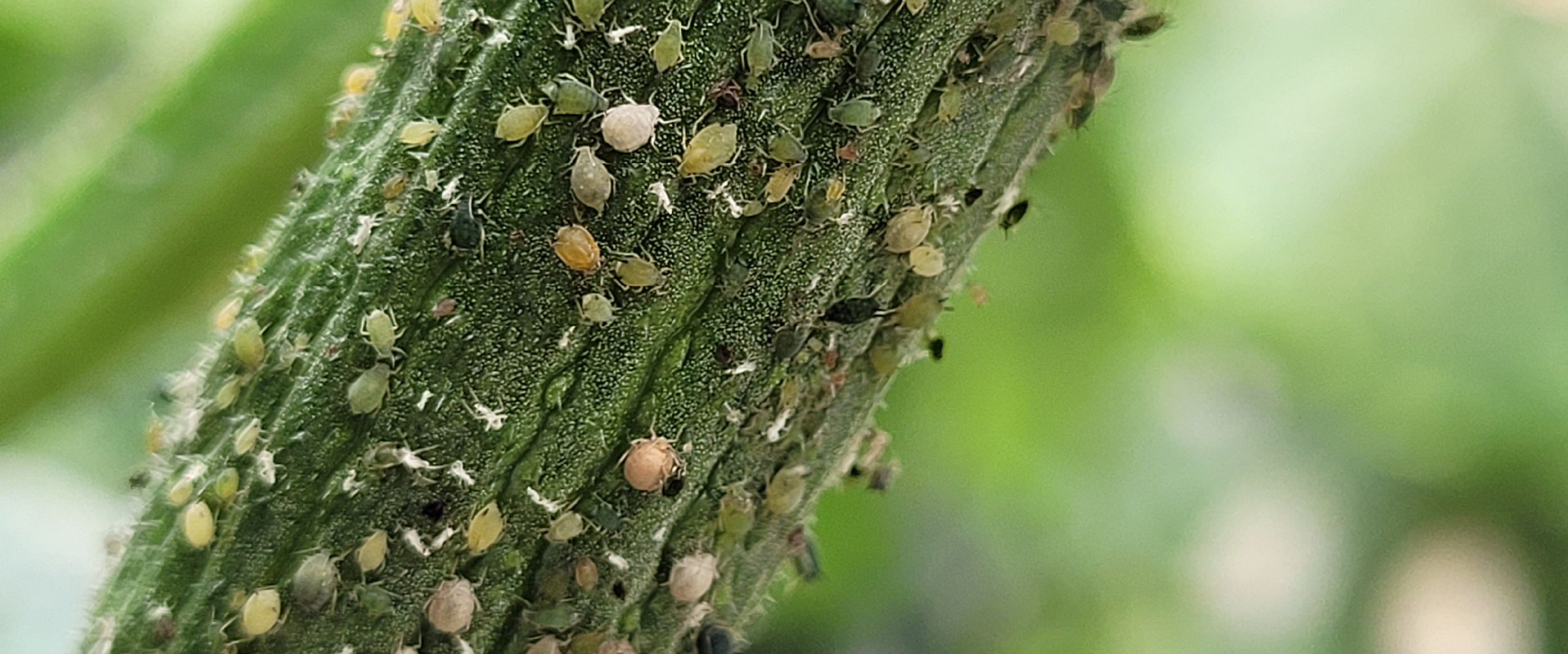
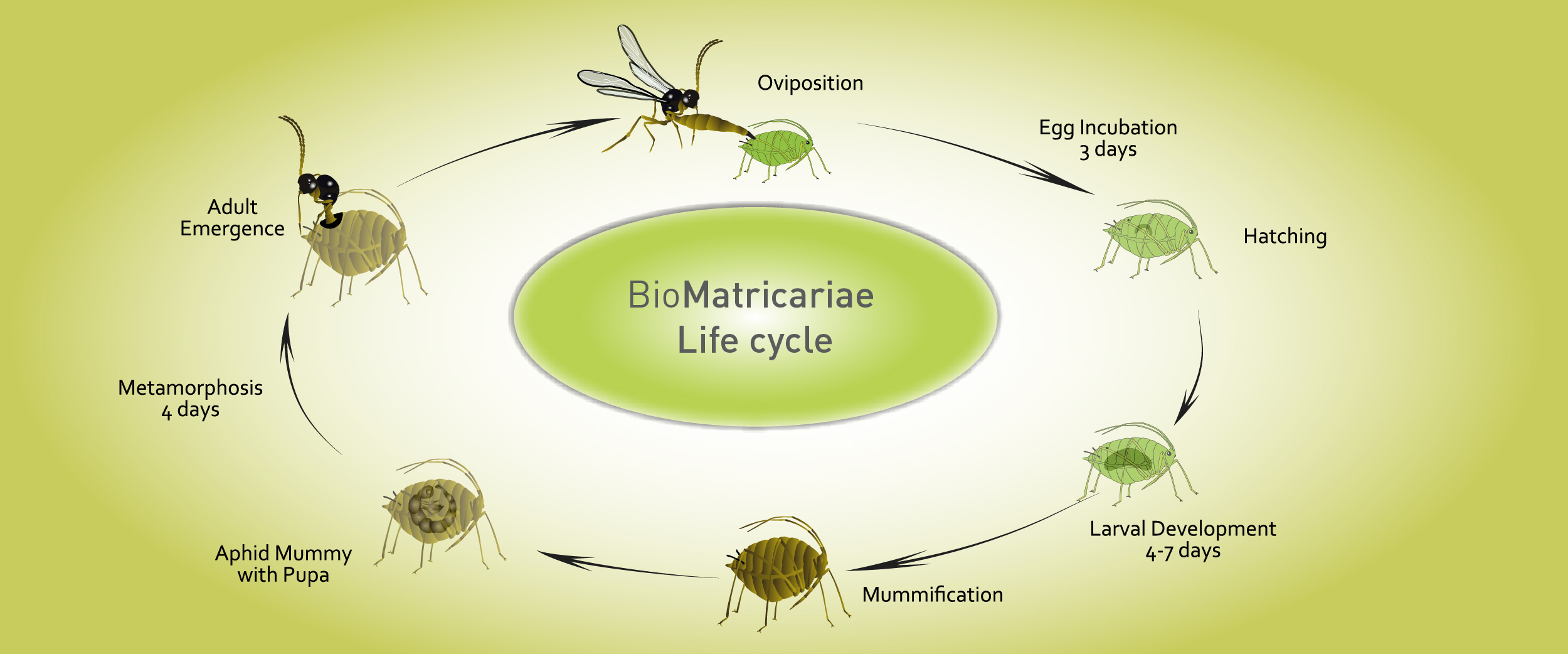
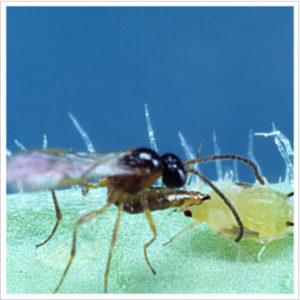
BioMatricariae (Aphidius matricariae) is a parasitic wasp, known to attack more than 40 aphid species in the family Aphididae.
The adults are small slender wasps with black, brown and yellow coloration, brown legs and long antennae. The female inserts a single egg in the host aphid, which develops whilst consuming the internal tissues of the host. BioMartricariae’s size depends on the size of the parasitized aphid, but is usually about 2-4 mm long. Aphidius matricariae’s activity is optimal between temperatures of 59°F-82°F (15-28°C). This species is not strongly affected by short-day induced diapause, so it can be used all year long. A complete life cycle takes about 10 days at 77°F (25°C) and under optimal conditions female wasps may parasitize 100 or more aphids in her lifetime.
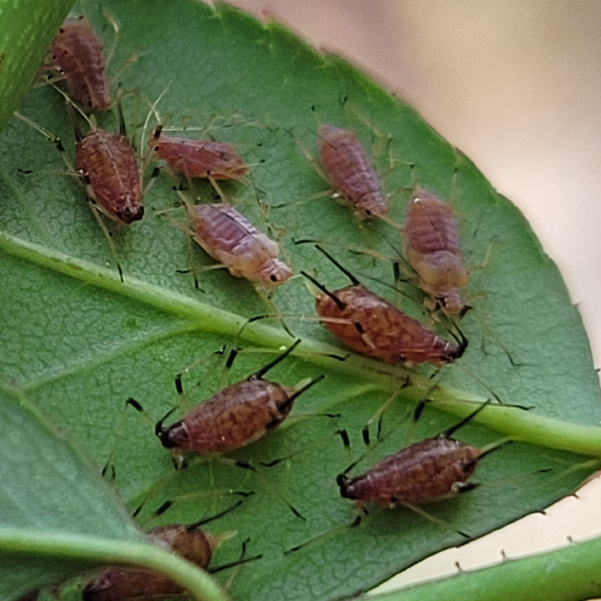
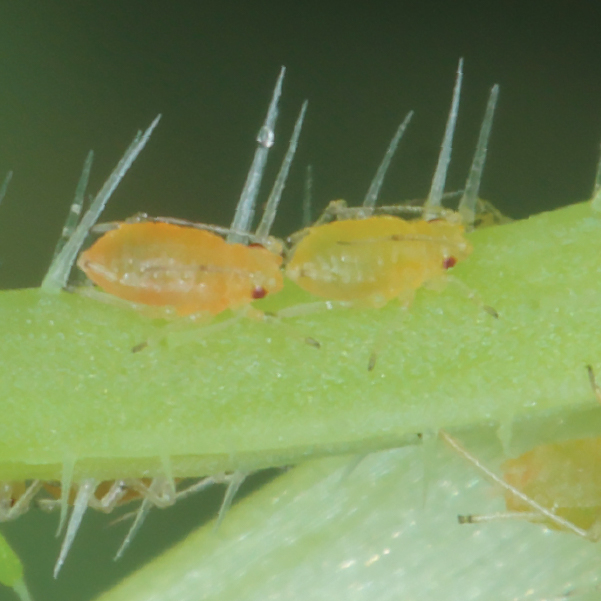
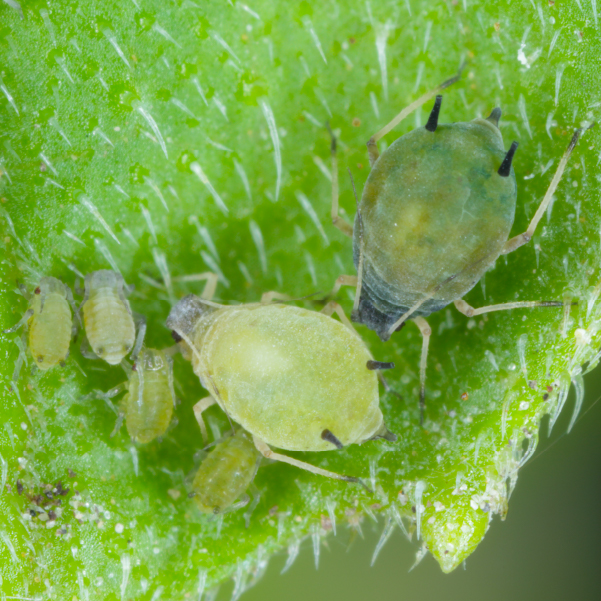
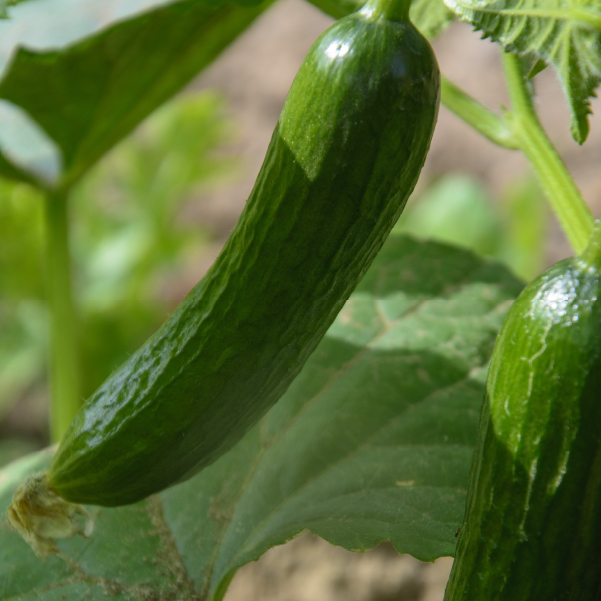
It mainly targets the green peach aphid (Myzus persicae), the cotton/melon aphid (Aphis gossypii), the tobacco aphid (M.p. nicotianae) and black bean aphid (Aphis fabae) among others. BioMatricariae is used in vegetables, field crops, greenhouse ornamentals, cannabis and strawberries. It is often used in greenhouse production but can also be used in open fields.
Consult with your local BioBee for product availability in your country.
Target Pests

Product
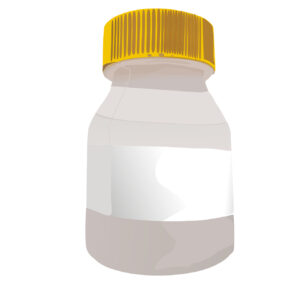
BioMatricariae is supplied as mummies containing the parasitoid’s pupa. Thus, the product reaches its destination while “fresh” and its performance is enhanced.
Each bottle contains 1,000 mummified aphids mixed in buckwheat.
At least 50% of the emerging adults are female.
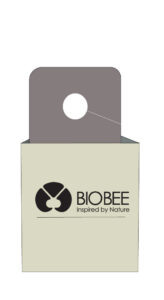
D-boxes can be used to apply the mummies.
Application
- BioMatriarcariae is shipped in temperature-controlled boxes which must be kept intact until reaching the end-user.
- Ants may interfere with parasitic wasps. If ants are present, treat the area before applying the wasps.
- Do not sprinkle the mummies actively from the container.
- Distribute by opening the bottle, allowing wasps to fly out in search of aphids.
- Place the bottle in the shade (under the plant canopy), near the infested plants. Bottles may also be emptied into D-Boxes and hung in the plant canopy.
- If necessary, it is recommended to keep the product at room temperature until emergence is observed.
- Do not expose the bottles to direct sunlight.
Before combining BioMatricariae with any chemical pesticide in the crop, please consult your BioBee technical field representative.


Storage
-

Storage temperature
-

Do not store in sunlight
-

Treat area against ants
-
Hang product on the plant
-

Store horizontally
Disclaimer
BioBee Sde Eliyahu Ltd. produces and markets biological products. Production is carried out using innovative techniques under controlled quality assurance standards such as ISO 9001:2015, as well as IOBC’s international standards for mass-production of insects. All products are tested to meet specification requirements before leaving the factory.
The success of biological pest control is affected by the crop’s initial pest population (upon application of the product), weather conditions and chemical residue present in the crop, among other possible aggravating factors.
Under no circumstance shall BioBee be liable for the outcome of the implementation in the field, as it has no control over local conditions, the application method, or the possible improper treatment/storage of the product.