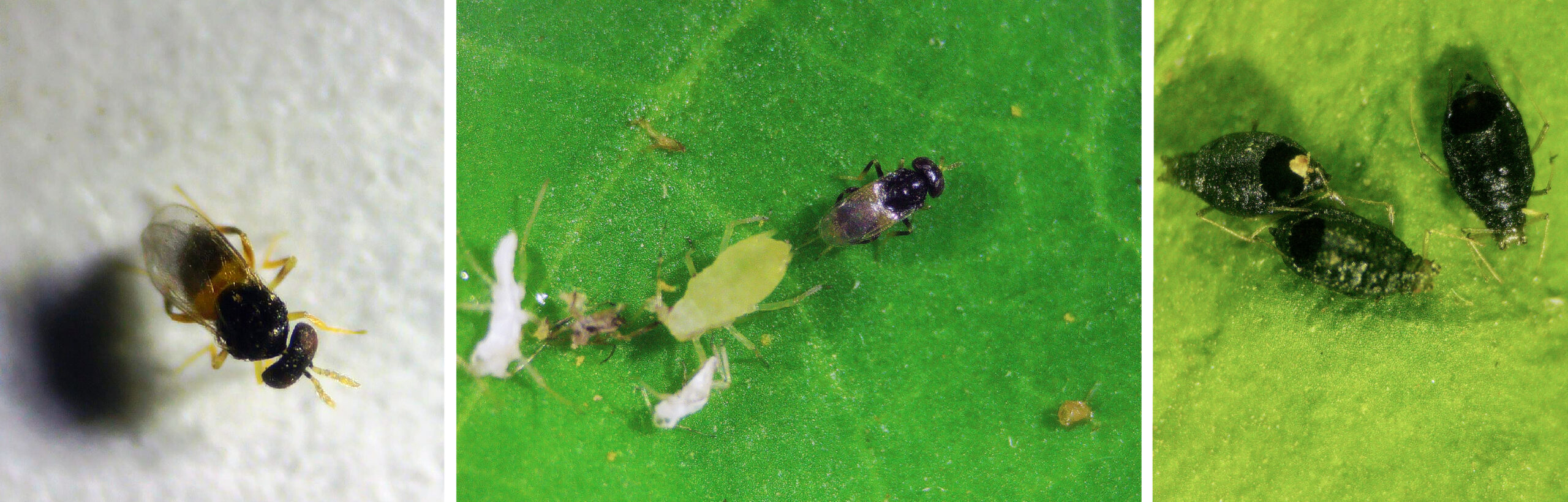
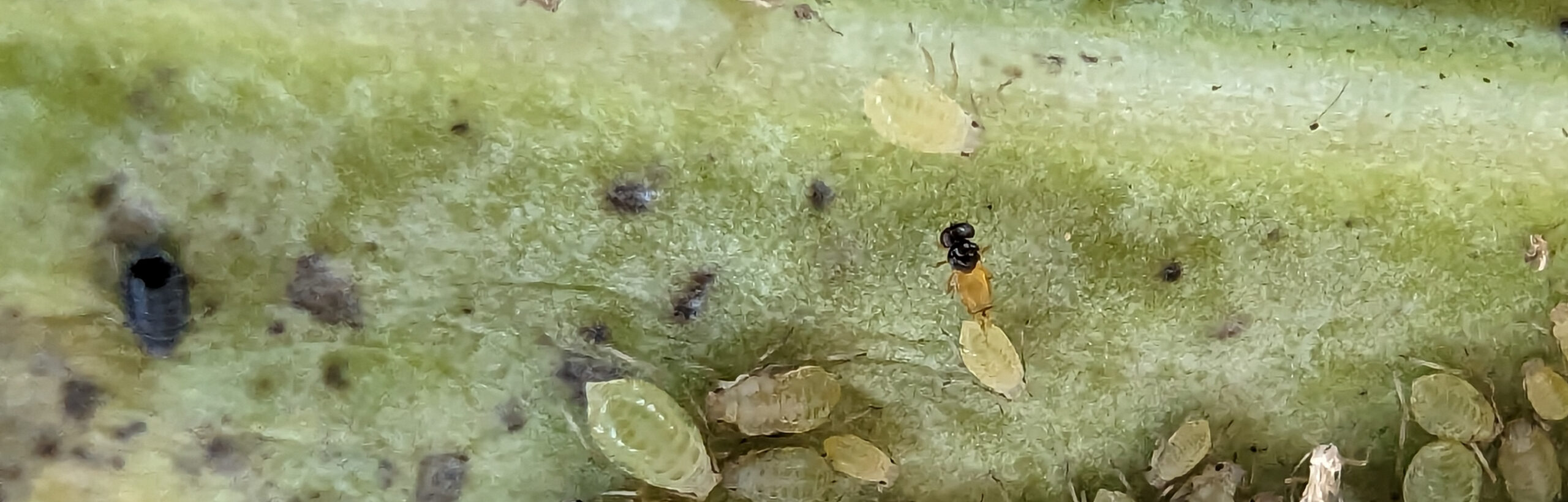
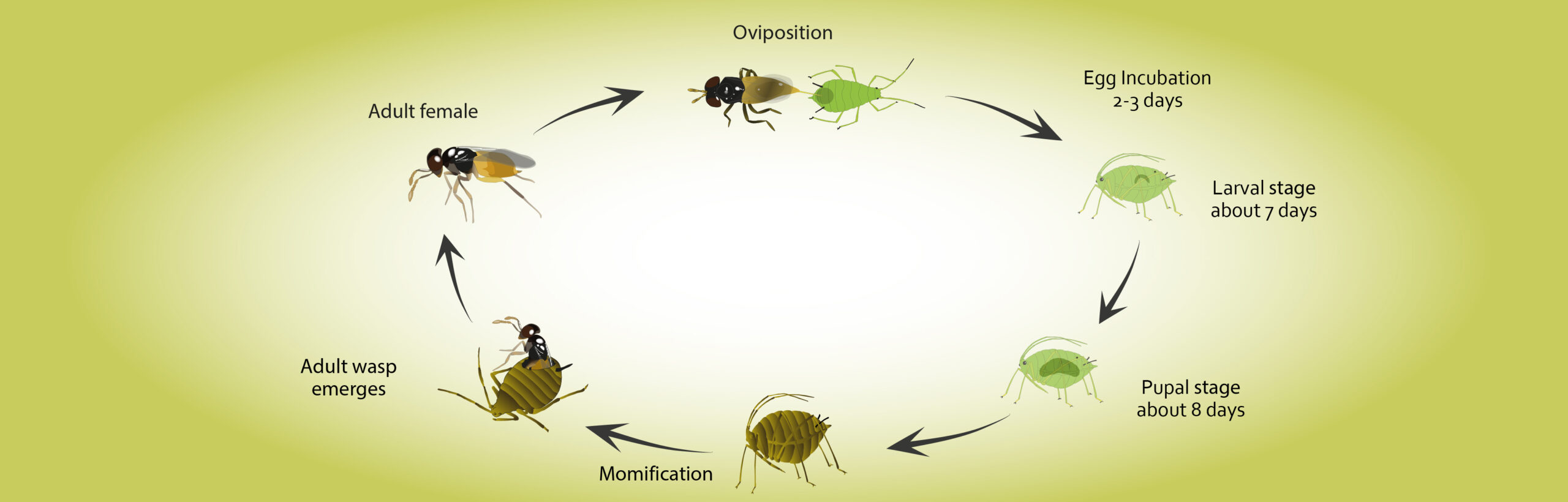
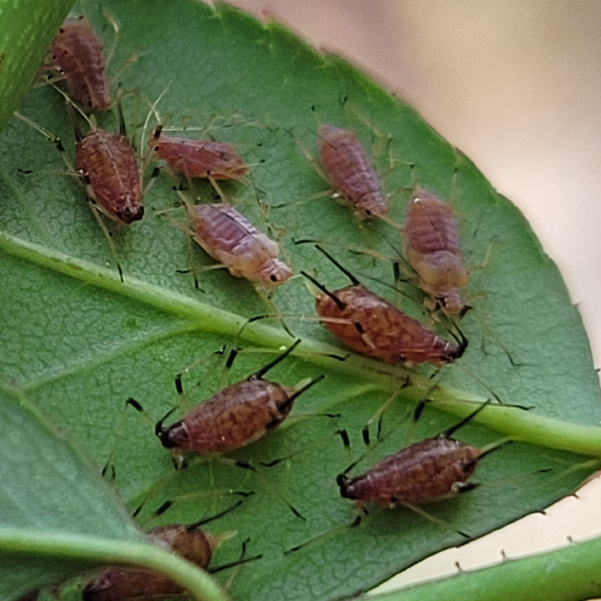
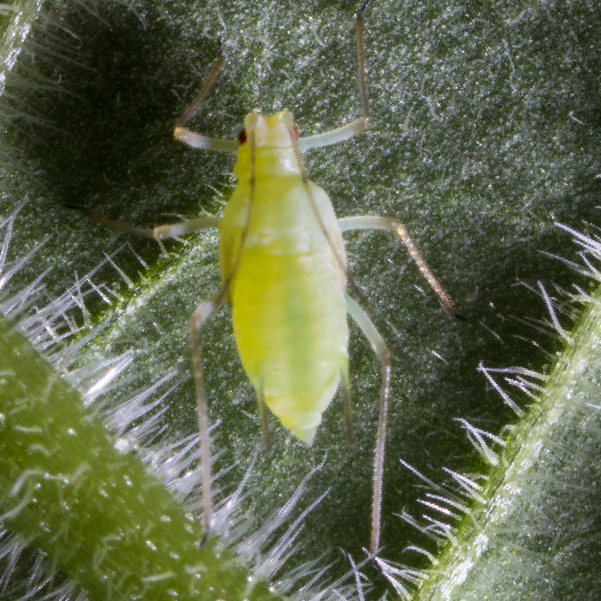
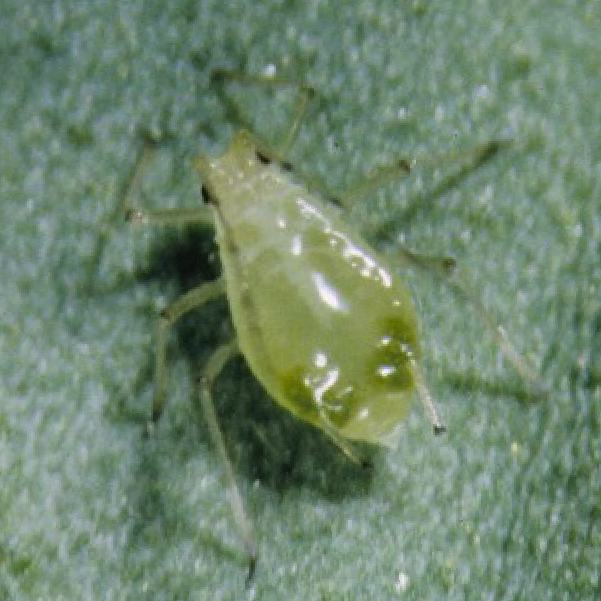
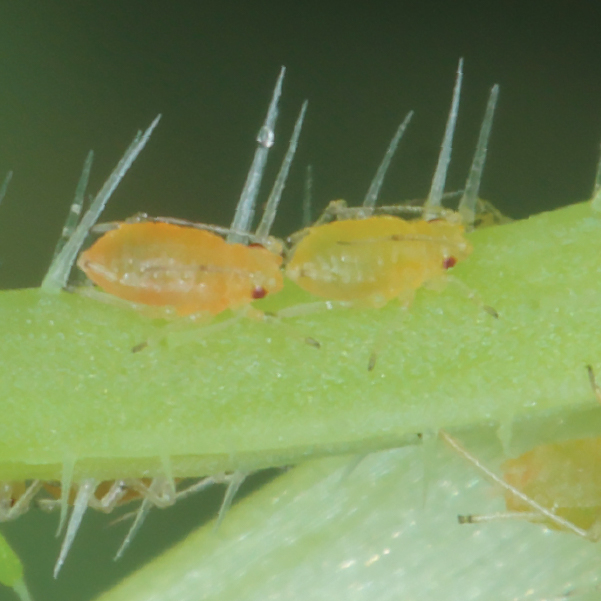
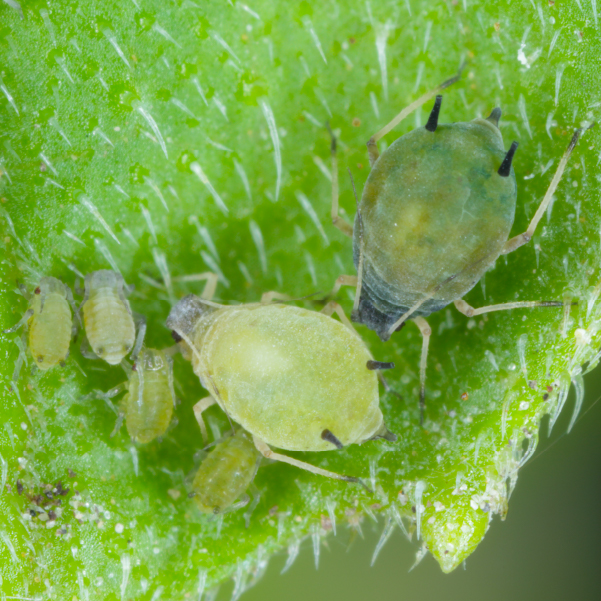
BioAphelinus, also known as the aphid parasite, is an effective parasitic wasp that both parasitizes and feeds on its prey/host. Particularly effective against the potato aphid (Macrosiphum euphorbiae) and the foxglove aphid (Aulacorthum solani). It also targets the green peach aphid (Myzus persicae), cotton/melon aphid (Aphis gossypii), cereal aphids (Sitobian avenae and Metopolophium dirhodum) and the pea aphid (Acyrthosiphon pisum).
The adult is about 0.08 inches (2-3 mm) long, has a black thorax with a yellowish-brown abdomen and relatively short antennae. Males are slightly smaller and darker than females. The female produces up to 250
offspring over several weeks.
Consult your local BioBee representative for additional details.
Target Pests
Application
- BioAphelinus is shipped in temperature controlled boxes which must be kept intact until reaching the end-user.
- The parasitic wasp should be released as soon as possible.
- Release BioAphelinus early morning or late afternoon, when the temperature is milder.
- Apply the wasps to foliage where aphid infestations are present.
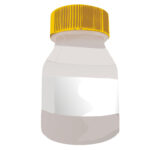
- The bottle contents may also be emptied into D-Boxes and hung in the plant canopy.
- Do not expose to direct sunlight.
- BioAphelinus introduction rates are determined according to the nature of the crop and the rate of aphid infestation.
Before combining BioAphelinus with any chemical pesticide in the crop, please consult your BioBee technical field representative.
Crops


Storage
-

Storage temperature
-

Do not store in sunlight
-

Roll back & forth before use
-

Store horizontally
Disclaimer
BioBee Sde Eliyahu Ltd. produces and markets biological products. Production is carried out using innovative techniques under controlled quality assurance standards such as ISO 9001:2015, as well as IOBC’s international standards for mass-production of insects. All products are tested to meet specification requirements before leaving the factory.
The success of biological pest control is affected by the crop’s initial pest population (upon application of the product), weather conditions and chemical residue present in the crop, among other possible aggravating factors.
Under no circumstance shall BioBee be liable for the outcome of the implementation in the field, as it has no control over local conditions, the application method, or the possible improper treatment/storage of the product.